I Tracked Every Penny for 30 Days — Here's What I Found
I Thought I Had a Pretty Good Handle on My Spending. I Was Wrong.
I'm not a financial disaster. I have a budget. I check my bank account regularly. I know roughly what I spend on rent, groceries, and utilities. I thought I had a pretty good handle on where my money goes.
Then I tracked every single transaction for 30 days. Not roughly. Every penny, every purchase, every transfer, every fee. And what I found was humbling.
The Rules I Set
Every transaction logged within 24 hours. No rounding. No skipping "small" purchases. No combining categories to make the numbers look better. Cash purchases logged immediately. Subscriptions logged on the day they hit. The goal was accuracy, not comfort.
What I Expected to Find
I expected my spending to roughly match my mental model: rent, groceries, utilities, some dining out, a few subscriptions. Maybe a little more dining than I'd admit. Nothing shocking.
What I Actually Found
Food spending was 40% higher than I thought. I had a mental model of ~$400/month on food. The actual number was $563. The gap: $163/month in purchases I wasn't mentally categorizing as "food spending" — the coffee, the snack at the gas station, the "quick" lunch that wasn't quick or cheap.
I had 11 active subscriptions. I thought I had 6 or 7. The extras: a cloud storage upgrade I'd forgotten about, a news subscription I read maybe twice a month, an app I downloaded for a specific trip two years ago, and two services I genuinely couldn't identify until I Googled the charge.
Convenience premiums added up to $180/month. Delivery fees, tips on delivery orders, the premium tier of a service I use the basic features of, airport food on one trip, last-minute purchases because I didn't plan ahead. None of these felt like spending in the moment. Together they were $2,160/year.
I spent $340 on things I don't remember. Not fraud. Just purchases that left no impression — small enough to be invisible, frequent enough to add up. This was the most unsettling finding. $340 in a month, gone, with nothing to show for it.
What Changed After the 30 Days
I canceled 4 subscriptions immediately ($67/month). I set a grocery budget with a specific weekly limit and started meal planning. I deleted the delivery apps from my phone's home screen (friction works). I implemented a 48-hour rule for any unplanned purchase over $30.
The next month, my total spending was $380 lower. Not from deprivation — from visibility. I didn't stop doing things I enjoyed. I stopped paying for things I didn't notice.
What 30 Days of Tracking Actually Teaches You
The specific numbers matter less than the categories of surprise. Almost everyone who does this exercise finds the same things: food spending is higher than expected, subscriptions are more numerous than remembered, convenience premiums are invisible until totaled, and some percentage of spending is genuinely unaccountable.
Knowing this doesn't require 30 days of tracking every year. It requires one honest month, followed by a system that keeps the visibility going without the manual effort.
Ready to Put This Into Action?
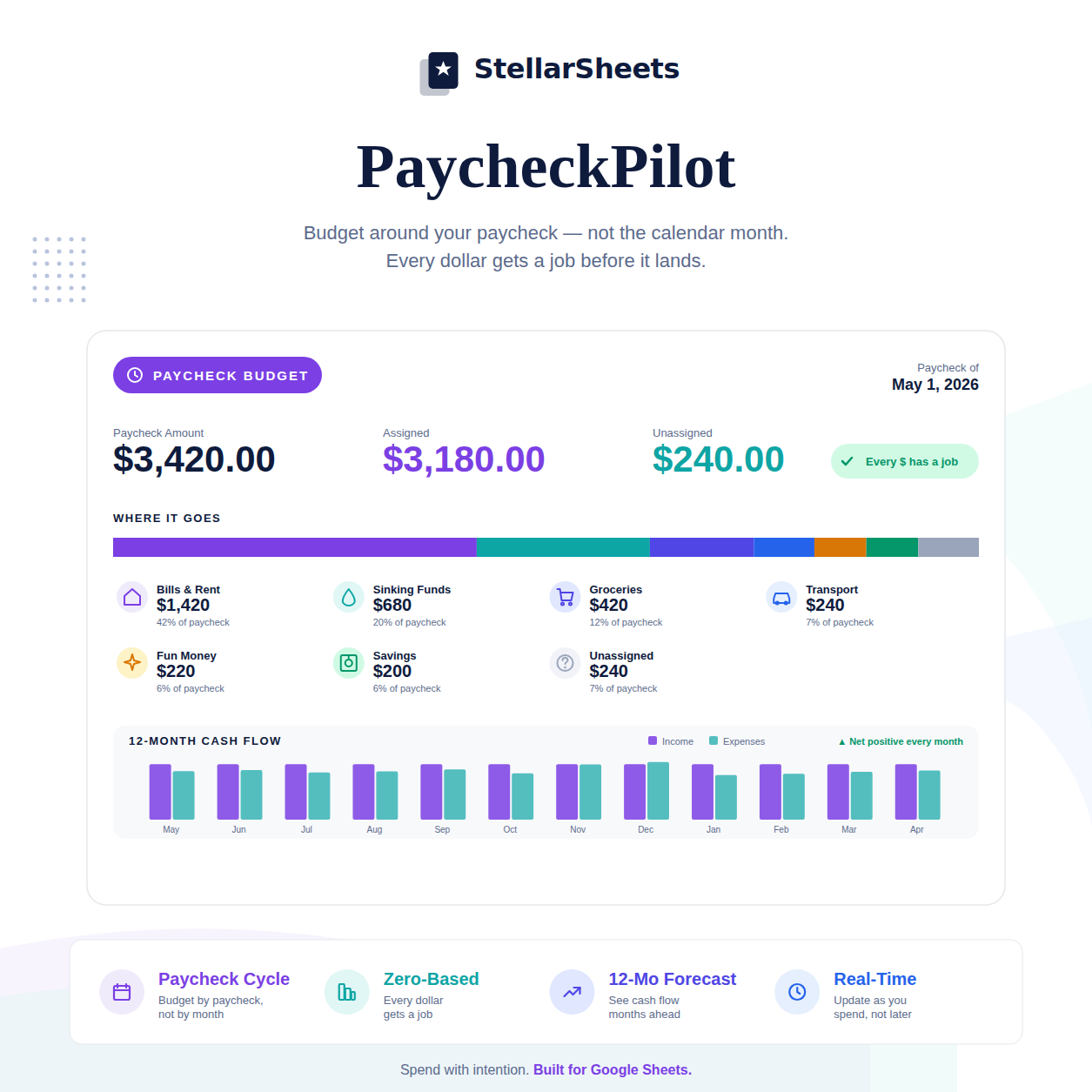
Knowing the strategy is step one. Having the right tool is step two. PaycheckPilot – Google Sheets assigns every dollar before you spend it — zero-based, paycheck-by-paycheck, with a 12-month cash flow forecast built in. Pre-built formulas, instant download, yours forever.
Or browse the full Budgeting Templates collection to find the right tool for your situation.
-
Posted in
budgeting, expense tracking, google sheets, money habits, personal finance